Category: writing

  • You Got Some of Your Book on Me!

    Published authors are driven people. After all, we had the stamina to put a book together and edit it ten or more times. After our great effort, we want the world to stand up and applaud our genius. We aren’t asking much, just millions of dollars, a movie deal, and a line of toys.

    Given that million dollar contracts are not easy to get, there may be other ways to achieve the recognition we desire. The writer with cash can spend $10k to have his or her book Still, there’s no guarantee that anyone will read it.

    In the Coyote series by Allen Steele, we find a man who wakes up in the middle of an interstellar voyage and is unable to get back in cryosleep. He has to live out his life alone as the starship makes its slow journey across empty space. During that time he writes a series of books and mural paintings describing a fantasy world. When the colonists finally reach their home, they find his body and the first literary contribution to their culture. Even if his writing isn’t stellar (notice the pun), he’s immortalized. Many of us authors would take that deal.

    Alas, trips on starships aren’t so common either. Fortunately, there’s another, brilliantly diabolical option that combines the above characteristics of killing the author and being expensive: germs.

    A team of scientists recently discovered how to write a book on DNA. Imagine how famous your zombie apocalypse novel would be, if it came as part of the killer germ that caused the zombie apocalypse. Yes, you’d probably wind up as another brain-sucking nightcrawler, but you would be famous (assuming a cure is ever found).

    Ironically, many readers expect this kind of scenario from authors. Why else do they furtively sneak past the guy doing a book signing at the local book store? No one wants to be patient zero in a diabolical plot to make a book famous.
  • Sword and Illusion

    A few years ago my wife and I completed a book titled, “Sword and Illusion” about a warrior woman, accustomed to fighting dragons and leading armies. As she approaches middle age, she faces the most terrifying challenge of her life: finding a husband. Many men come to the competition to win her hand, and few of them are what they seem, least of all the Prince of Tellan whose magic comes from dreams themselves.

    We’ve just signed with Astraea E-Press, and I will give you all updates when release day comes.

  • Holiday Traditions of the Internet Age

    I’ve got Norad Santa up and am tracking Santa’s progress across the globe. As far as holiday traditions go, this one is particularly interesting to me as a writer.

    Whenever a writer tries to create a fictional culture, (s)he tries to make things believable by envisioning all the consequences to society. One of the ways to gain a real feel is by inventing holidays or traditions that relate to peculiar conditions of your world. If you have two moons, you would have a conjunction day, which might be a celebration of love.

    Many science fiction writers of yesteryear envisioned the internet. Did any of them think of this? Future generations will wonder what the holidays were like without it.

  • Excerpt: The Turquoise Bones

    Here is an excerpt from my current work in progress, “The Turquoise Bones.”


    “In preparation, we give Cor Hydrae a taste of her enemy’s blood.”

    Turquoise lost her balance for just a second as the bronze sword flashed through her belly skin, making a shallow cut. Before she righted herself, she noticed the pulsar had slithered into the ring. It was tiny by comparison to Sagittarius, but its black body stretched past many poles. This creature was bigger than the one she’d fought before.

    Now that her blood was falling, it became eager, slithering forward with all its might. Yet for all that it moved clumsily, as if it were wounded or–no, it couldn’t be. Cor Hydrae was pregnant.

    If she killed this beast, its children would eat their way out and attack within seconds. A dozen or more of the animals, small, fast serpents would emerge, eager to destroy every living thing in range of their teeth–including each other. Only the strongest few in any given pulsar litter would survive.

    Tycho jabbed her again, and she stumbled. Blood ran down her leg and dripped to the rock platform, making it slick beneath her feet. Perhaps it was not their intent to let her fight again, to have a chance to kill the pregnant Cor Hydrae.

    Another pulsar shirt stepped onto the platform with a thistlevine rope. He roughly grabbed Turquoise and threaded the rope across her back and beneath her arms, making a wide loop. She watched as he tied a knot with quick practiced movements. When he was finished, he knelt and adjusted the rope that hobbled her legs, then stood and roughly shoved her backwards from the edge.

    Turquoise had resolved to be brave, to show no fear and to avoid crying out. Yet in that moment, when the small rock platform that separated her from the animal was taken away, her resolve slipped. Her arms tightened to her sides, clinging to the rope. Her mouth opened to scream, but she caught sight of Sol, and the sound died in her throat.

    Sol watched her, silent, angry, the hunter waiting for his moment. Suddenly she knew he had a plan. It was the inspiration she needed, and after she fell the short distance the rope allowed, she looked up and bared her clenched teeth. It was the fiercest expression she could think of, and Tycho watched her quietly.

  • Congratulations Novelist, You Won

    Today I roared past the finish line of Nanowrimo, clocking in at 50,791 words with one day to spare. My novel, “The Turquoise Bones,” will not be complete until another 30K or so words are added, then edited. Still, it is a moment to celebrate.

    Some of my readers may remember my discussion of using a beat sheet and plotting out my novel scene by scene. Said readers may be wondering if I can credit my success to that outline. Well. Yes and no. First the “No.” While the story I’ve been writing bears a strong resemblance to that outline, it diverges from it in many ways as well.

    “Yes,” because my outline has kept the story on the course I intended. “Yes,” because this is a drastic improvement in my efforts at story creation. Prior to discovering the beat sheet, my first draft was little more than a collection of ideas from which to build a story. Only after the 2nd time through did the plot make sense, and three or four edits before it was ready for critiquing. I’m hoping to get critiques of “The Turquoise Bones” after one edit.

    With practice, I think I can learn to make beat sheets that are closer to the final story, kind of like improving a golf game. Some day, maybe I’ll score a hole in one and capture the story on the first draft.

  • Writing Progress for Turquoise Bones

    I just finished writing a scene I was particularly proud of and came out to the dining room and announced, “The secrets of the Whisper Stone have been revealed!”

    My wife said, “That’s great. Until now, I didn’t know there was a Whisper Stone or that it had secrets.”

    I said, “Until last night, neither did I.”

    If you are a writer, you know what this experience is like. Happy post-turkey day to all.

  • Finding The Story

    Writing is a tough process. I sit down try to write out a rough plan of the story, then start writing scenes. Frequently my ideas for scenes don’t work, or when I figure out a way to make them work the story takes off in a new direction. The first attempt at writing the novel winds up being just a collection of random ideas and it takes 3 or 4 passes to get something passable from it. The process is long and painful.

    Recently I’ve become a fan of http:StoryFix.com. I’ve been dutifully digesting Larry Brooks’ advice on story structure, but only recently have I discovered his advice about the “beat sheet.” What is the beat sheet? Just a list of scenes. You fill in 12 to 14 of them for each of the four parts of your novel, then you start writing.

    Now I admit, on the face of it, it doesn’t sound like much. In fact, I’ve tried this kind of thing before and it hasn’t worked well. But I was missing one ingredient: The Mission.

    The “Mission” tells you how to write a one sentence description of a scene that actually works. Larry Brooks says that the mission is about the information that the scene imparts, something important to the story. The test of whether a scene has a mission, he says, is whether (after reading the scene) a reader can tell why that scene is in the story. Knowing the mission of a scene is the key to writing a one sentence description that works.

    Now I can write these one sentence scenes and move them around, and the process feels a lot like my much longer more painful process of finding my story but vastly accelerated.

    How do I put this together with Larry’s other advice on story structure? For me, I work in both directions. I fill in the plot points, theme, etc. if I can, then I jump to the beat sheet, then back. It’s like my previous, much longer and more painful process, but the story outline feels so much stronger.

    While I’m in the early part of finding the story I don’t worry so much about getting the scenes into collections of 12 to 14. That’s a longer term goal. Will all this help me to write a novel in one draft? Well, we’ll see. I am about half way through creating my beat sheet for my next novel and in November I’m going to put this theory to the test. In November it will be National Write a Novel in a Month Month.

    Stay tuned.

  • On Combat

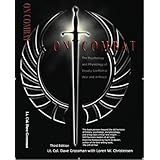
    I recently read the book “On Combat” by Dave Grossman and Loren W. Christensen. I read it because, as a writer of fantasy and science fiction, I wanted to understand combat better. I was not prepared for just how much interesting information I would receive.

    First, there are a lot of interesting perceptual distortions that occur in combat. Auditory exclusion (soldiers/police often say that their weapons make little sound), tunnel vision, slowed time, loss of near vision.

    Second, there is the impact of training. People do not “rise to the occasion” in combat, but “sink to the level of their training.” People will behave as they trained when under stress, and if they always picked up their shell casings immediately after firing on the range they may do that same thing in the middle of combat.

    Third, he presents the overwhelming evidence that violent video games and TV cause violence in children. In particular there are rather strong reasons to blame the various school shootings to the influence of entertainment.

    Fourth, he talks about the need for everyone to be prepared for a violent attack. We all prepare for fire, even though it is unlikely to happen, but we are afraid to prepare for a deadly force encounter despite the fact that it is more likely than a household fire. I have been thinking about getting a dog as a pet, now I’m thinking about a dog that is big enough to defend the family. It’s not that I think we’ll be attacked at some point, I don’t. However, I don’t expect to need my accidental death insurance either.

    Fifth, it has made me want to say “Thank you for your service” to the police and military that put their lives on the line to defend others. Reading this book has helped me to better appreciate the fact that warriors stand on the border between civilization and chaos, and that without them we’d be lost. So I say again, if their are warriors out there, thank you.

    If you are a writer and intend to treat the issue of combat or soldiering, you owe it to yourself to read this book.

  • Lady and the Necromancer is Reborn

    A long time ago my wife and I began work on a novel called “Lady and the Necromancer (LATN).” It is an urban fantasy about a girl who falls in love with a monster–but a monster who isn’t a vampire. It was also a story of redemption. In 2005 I decided to get serious about writing and finished the book, as well as several others. LATN went on a two-year sojourn at Baen where it landed a very nice rejection letter. Only recently did I decide to feed it to my critique group, and as a result of the insights I gained the story was reborn.

    It has been re-imagined, a lot like the Battlestar Galactica series was (except I didn’t change the gender of any characters). Almost everything that happens in the story is the same–except the book ends sooner and not on a downer. The word count moved from 120k to about 95k, nearly an optimal length for this genre. The story also changed from being “Haunted Mansion” scary and kind of cute to being (I think) genuinely creepy.

    At the end of the story, the romance is still in its early stages, but the main protagonist, Thomasina Berkeley, is a different girl. The story is now about her discovery of who (and what) she is. Last night around midnight I finished the re-editing process and am still bathing in that “just finished a novel” afterglow. It’s time to get the critiques, to write synopses, clean the rec room, and generally come back down to earth.

  • Dreamfever

    I recently finished reading Karen Marie Moning’s “Dreamfever.”

    I’m still trying to figure out how she does it. It usually takes me about a month to read a book, but I don’t think any book in the fever series took me longer than a week. Because I write novels myself (but am not yet published) I study always the story structure, the sentence construction, the character development etc. of every book I read. Usually I can spot errors or things that I think should be done differently. With these books, however, my analysis gets short-circuited. (more…)