I don’t generally read self-help books, or books on how to be a success, but I made an exception for this one because it was written by Scott Adams. I find his blog to be thought-provoking and inciteful, even if I don’t necessarily agree with his opinions. I found this book to be chock-full of useful advice about life and how to be more successful at it. One key piece of advice is to put your health first–ahead of family, your job, etc. because (he says, and I agree) you can’t be good at anything else until you take care of your own body. Anyhow, I strongly recommend it.
There is much to love about this book. And speaking of love, this story completes a story arc for Waxilliam Ladrian (a.k.a. Wax) in a most satisfying way. Wax has never been able to love anyone since the death of his first wife, Lessie. Instead of trying again, he got engaged to Steris for political reasons. All the while, I’ve been rooting for Steris’ sister, Marrisie, to claim his heart. She seems the more logical choice. Unlike her cold and calculating sister, she has a real interest in police work. Love, however, is never quite what you expect. Nor is it here.
Lou Anders (editor of Pyr books) recommended the book “My Story Can Beat Up Your Story” at a writer’s workshop I attended. It took me a while to get to it, because I’ve read a number of books/articles on story structure and I wasn’t eager to hear the same old thing again. However, it turns out that this isn’t the same old thing. In fact, I’ve just promoted this book on my mental shelves to the number one position for story structure.
I should mention that this book is technically a book on screen writing, not novel writing (which is my main interest). However, story structure for movies and books tends to be quite similar. This book provides a number of fairly intuitive lists, e.g. the four questions to ask about your hero, the three goals regarding the Central Question, the twelve plot point of act one, etc. These lists, in turn, are applied to various movies to provide a solid understanding of how each of these lists work. The detail is such that I almost believe one can write a story by filling in the blanks–of course, those blanks are all interconnected and so filling in those blanks is a bit like solving a crossword or Sudoku.
It is a great book. Anyone looking to improve their knowledge of writing should read it.
Harry’s problems escalate as enemy after enemy decides to focus its attention on him. Any one of them would be enough to challenge the powers of the wizard who wears the mantle of the Winter Knight and carries the power of soulfire, but the combination is overwhelming. And when Harry finds the connections between his many problems, the battle to the finish is filled with more reversals than a chicago politician’s stance on the issues.
Ill Wind is an Urban fantasy that contains wardens (basically wizards capable of using one or more of the four basic elements) and djinns and demons. The unique element of the fantasy component comes in the form of the detailed descriptions of weather control and how the wardens manipulate the elements of meteorological science. While the story does suffer from excessive flashbacks, it’s well-written and fun. Although this is the beginning of a series, Ill Wind does not leave any serious loose ends and works well as a standalone novel.
Curse of Chalion is beautifully written, funny (though it’s not a comedy), and deeply interesting book. The religions in the book were interesting and believable enough that I found myself identifying with one of them over the other, feeling that it was more “right.”
In fact, the story is largely the tale of a spiritual journey with some interesting observations along the way. A saint (in the Chalion religion) is not a person who is pious or good, but one who is “empty.” One who makes himself or herself a vessel to be used by the gods (in this world there are either 4 or 5, depending on which faith you follow).
Apart from a slow section around the 3/4 mark, this was really an excellent book.
I recently read the book “On Combat” by Dave Grossman and Loren W. Christensen. I read it because, as a writer of fantasy and science fiction, I wanted to understand combat better. I was not prepared for just how much interesting information I would receive.
First, there are a lot of interesting perceptual distortions that occur in combat. Auditory exclusion (soldiers/police often say that their weapons make little sound), tunnel vision, slowed time, loss of near vision.
Second, there is the impact of training. People do not “rise to the occasion” in combat, but “sink to the level of their training.” People will behave as they trained when under stress, and if they always picked up their shell casings immediately after firing on the range they may do that same thing in the middle of combat.
Third, he presents the overwhelming evidence that violent video games and TV cause violence in children. In particular there are rather strong reasons to blame the various school shootings to the influence of entertainment.
Fourth, he talks about the need for everyone to be prepared for a violent attack. We all prepare for fire, even though it is unlikely to happen, but we are afraid to prepare for a deadly force encounter despite the fact that it is more likely than a household fire. I have been thinking about getting a dog as a pet, now I’m thinking about a dog that is big enough to defend the family. It’s not that I think we’ll be attacked at some point, I don’t. However, I don’t expect to need my accidental death insurance either.
Fifth, it has made me want to say “Thank you for your service” to the police and military that put their lives on the line to defend others. Reading this book has helped me to better appreciate the fact that warriors stand on the border between civilization and chaos, and that without them we’d be lost. So I say again, if their are warriors out there, thank you.
If you are a writer and intend to treat the issue of combat or soldiering, you owe it to yourself to read this book.
Sometimes life gets out of control and a lot of things happen. When you get past it, if you do, you question who you are, what you’ve accomplished, and what’s important. Then you put all your sorrows and regrets in a little box and take time out to appreciate the good things you have left, you spend time with family and friends and take in the sunshine (from the comfort of air conditioning). When the evening comes you toast those who’ve gone before and think about the good memories.
What happened? Well, I finished another book in the Dresden Files series. In “Turn Coat.” These books can make a significant emotional impact. Harry Dresden rides out a tough storm and comes through with a little less than what he went in with. One of the nice things about a long-running series are the bit characters, the ones that come and go but aren’t part of the major plot. They aren’t as protected as the main characters. They can live, die, make spectacular gains and undergo personality shifts. They provide uncertainty and drama and bring more life to the stories. They make things more real. Here’s to you, little guys.
I recently finished reading Karen Marie Moning’s “Dreamfever.”
I’m still trying to figure out how she does it. It usually takes me about a month to read a book, but I don’t think any book in the fever series took me longer than a week. Because I write novels myself (but am not yet published) I study always the story structure, the sentence construction, the character development etc. of every book I read. Usually I can spot errors or things that I think should be done differently. With these books, however, my analysis gets short-circuited. (more…)
I just finished “California Demon” by Julie Kenner. It is a humorous fast-paced story of a mom who hunts demons while her toddler is in day care. I think I liked it even better than the first book, “Carpe Demon.”
Things I liked:
Solidly plotted and entertaining story with engaging characters. The heroine, Kate Conner, has two kids, thirteen years apart (the daughter is the older one). This is exactly like my family, and I can tell you that the personalities of the children are exactly right.
This story has a secret organization within the Vatican — and they are the good guys! As a Catholic, I get tired of seeing religious people in general and Catholics in particular as the villains. In fact, no group of people gets put down in these stories (well, except the demon-possessed).
One needs holy water and relics to fight demons, not generic symbols of faith. Remember those good old days before political correctness?
The only sex in the book is between married people, and the details are left up to our imagination.
Virtually no swearing. Many stories use foul language because it is “realistic.” I don’t want realism in the novels I read.
In other words, it’s just a lot of good clean, demon-bashing fun!
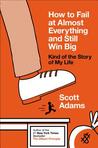 How to Fail at Almost Everything and Still Win Big: Kind of the Story of My Life by Scott Adams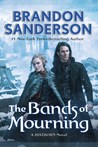

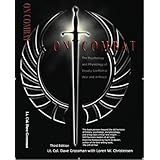 I recently read the book “On Combat” by Dave Grossman and Loren W. Christensen. I read it because, as a writer of fantasy and science fiction, I wanted to understand combat better. I was not prepared for just how much interesting information I would receive.